
Freshwater · Early spring spawning runs; autumn feeding
Nase
Chondrostoma nasus
A streamlined river cyprinid that grazes algae off stones with a hard, horny lower lip. Its status varies sharply by country: it is listed in Annex II of the EU Habitats Directive and is protected with closed seasons or full bans in many German states, yet it remains a common quarry fish in France and Spain — always check the local rules before fishing for it.
Seasons · Peak
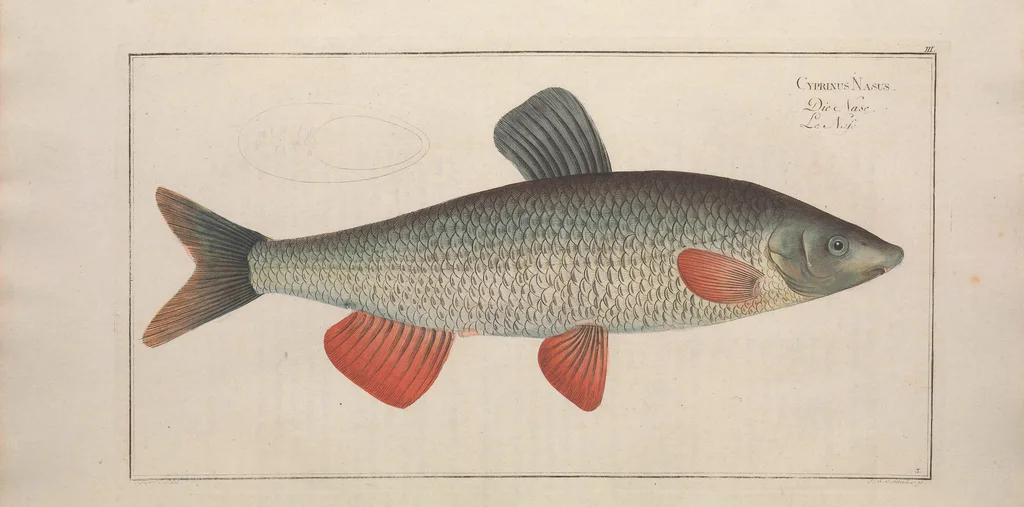
Identifying features
- Hard, horny, sharp-edged lower lip on a blunt, underslung snout — the scraping mouth is diagnostic
- Streamlined silvery body with a grey-green back and reddish fins
- Deeply forked tail and a straight, downward-facing mouth under the nose-like snout
- Small scales and a dark peritoneum (black belly lining) visible when cleaned
- Males in spring develop spawning tubercles and brighter orange-red fin bases
Habits
- Grazes algae and biofilm off stones in shoals, turning sideways in flashes as it feeds
- Runs upriver in early spring to spawn over clean gravel
- Its roe is toxic during the spawning season — never eat the eggs
- Holds in the fastest, best-oxygenated runs of the barbel zone
- Feeds mainly by day, scraping rather than picking at food
Distribution
Where to find them
- Gravel runs and weir pools on the Rhine, Danube and their tributaries
- Rocky runs of French rivers such as the Loire and Rhône tributaries
- Bridge footings and fast glides on the Ebro and its feeders in Spain
Where they live
How to catch them
Trotting a stick float down gravel runs River
Rig: 13-14 ft float rod, stick float and small maggot or caster hookbait trotted through fast gravel runs, feeding little and often
Bait/lure: Maggots, casters, sweetcorn
Key tip: Nase feed hard on the bottom in the flow — set the float so the bait just trips the stones.
Feeder fishing in weir pools River
Rig: Medium feeder rod with an open-end feeder and a short hooklength fished in weir pools and deep glides
Bait/lure: Maggots, worms, bread flake
Key tip: Where nase are protected or in a closed season, stop and release immediately — check the rules for the state or river first.
Best baits & lures
Baseline setup
- Rod: 13-14 ft float rod or medium feeder rod
- Line: 4-6 lb mono main line with a lighter hooklength
- Terminal: Stick floats, open-end feeders, size 14-18 hooks
Recommended gear for this species
Rod · Best value
9' 5-weight fly rod outfit
≈ US$180-260
Covers chironomid lakes and small rivers with one setup.
Flies · Budget
Chironomid assortment (30 patterns)
≈ US$25-40
Chironomids are 60% of a lake rainbow's diet in spring.
Picks come from our rule library — never paid placements. Prices are guides; affiliate links may earn us a commission.
Typical size
Common 10-16 in (25-40 cm), about 1-2 lb (0.5-1 kg); large fish to 20 in (50 cm) and about 4 lb (1.8 kg)
On the table
Poor to fair — soft, very bony flesh; the roe is toxic in the spawning season and must never be eaten.
Similar species
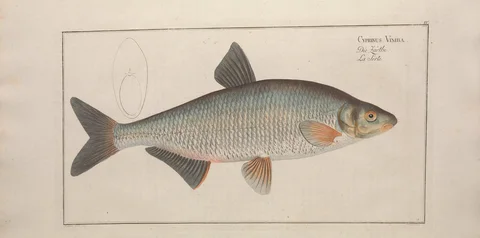 VimbaVimba has a soft, fleshy protruding snout and a keeled back behind the dorsal fin, and tolerates brackish Baltic water; nase has a hard, horny scraping lip and lives only in flowing fresh water
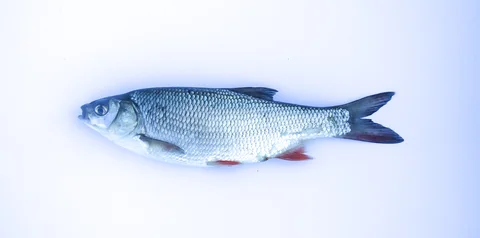 IdeIde is deeper-bodied with a small upturned mouth and no horny lip; nase is slimmer with a blunt underslung snout and a hard algae-scraping lower lip
Regulations vary by area and can change in-season — always check the official rules for your area before you fish. Regulations guide →
Plan a trip for Nase
Build today's plan