
Saltwater · Summer and fall best offshore; season and retention set by current federal rules — check before every trip
Atlantic Bluefin Tuna
Thunnus thynnus
The giant of the tunas and the pinnacle of Northeast offshore fishing, centred on New England. It is a quota-managed highly migratory species: permits, seasons and size limits change every year, so check current federal rules before fishing and keep no fixed numbers from any guide. The same species also occurs in the Mediterranean (a quota fishery) and in a UK release fishery.
Seasons · Peak
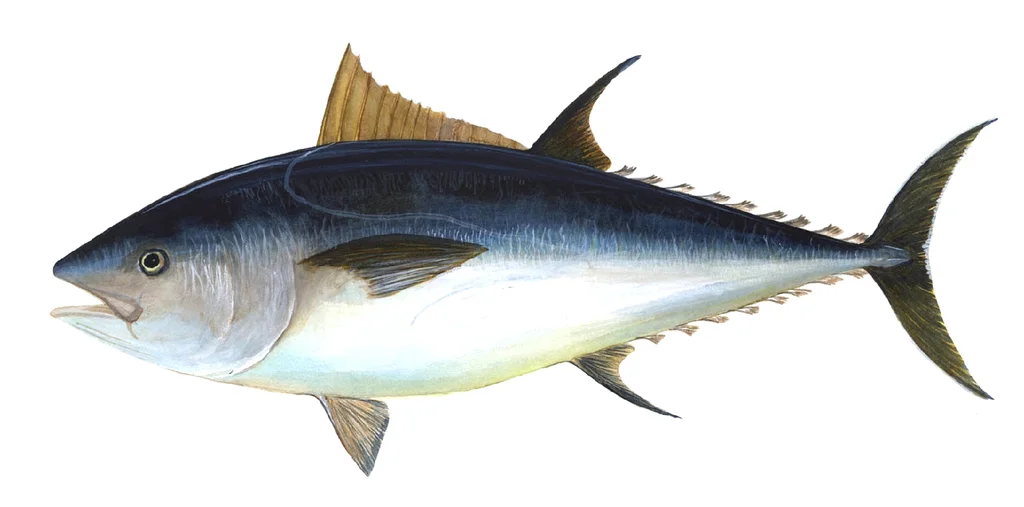
Identifying features
- Massive torpedo body, dark blue above and silvery-white below
- Very short pectoral fins that never reach the second dorsal fin
- Stout keel on the tail base and a lunate, stiff tail
- Second dorsal and anal fins short, with 7-10 finlets behind them
- Giants can exceed 1,000 lb (454 kg) — far larger than yellowfin or bigeye at first glance in build
Habits
- Highly migratory across the Atlantic, following bait and temperature breaks
- Feeds on herring, menhaden, butterfish, squid and mackerel
- Can partly warm its body, hunting in cold northern water
- Travels in schools by size; giants often solitary or in small groups
- Quota-managed — retention, seasons and permits change yearly; always check current federal rules
Distribution
Where to find them
- New England offshore banks and ledges in summer and fall
- Mid-Atlantic canyon edges when bait and warm water push in
- Carolina winter grounds for large fish, under current rules
Where they live
How to catch them
Trolling spreader bars and squid chains Boat
Rig: Heavy trolling gear, spreader bars and squid chains trolled over offshore structure and temperature breaks at 4-6 knots
Bait/lure: Artificial squid on spreader bars
Key tip: Troll the edges of bait and temperature breaks at first light — giants feed up top early.
Chunking on heavy stand-up gear Boat
Rig: Heavy stand-up gear, butterfish chunks on circle hooks, drifting in a herring or menhaden slick over structure
Bait/lure: Butterfish chunks
Key tip: Keep a steady chunk stream and hide the hook inside the chunk; patience in the slick is everything.
Best baits & lures
Baseline setup
- Rod: Heavy 50-130 lb class stand-up or trolling rod
- Line: 80-130 lb mono or braid with heavy leader
- Terminal: Circle hooks, spreader bars, heavy swivels and fluorocarbon leader
Recommended gear for this species
Rod · Premium
6'6" heavy trolling / stand-up rod
≈ US$200-320
Built to fight tuna, mahi and marlin from a harness — short, powerful, with heavy-duty guides.
Reel · Premium
Lever-drag trolling reel, 50 lb class
≈ US$260-400
A preset lever drag and 600+ yards of line are what separate landing a bluefin from watching it spool you.
Terminal · Best value
Trolling lures, rigged baits and deep jigs
≈ US$40-70
Skirted lures and cedar plugs on the troll, vertical jigs when the school sounds — the offshore spread basics.
Picks come from our rule library — never paid placements. Prices are guides; affiliate links may earn us a commission.
Typical size
Common school fish 30-100 lb (14-45 kg); large giants to over 1,000 lb (454 kg) and 8 ft (2.4 m) or more
On the table
Excellent — prized sashimi fish; retention is quota-limited, so many fish must be released under current rules.
Similar species
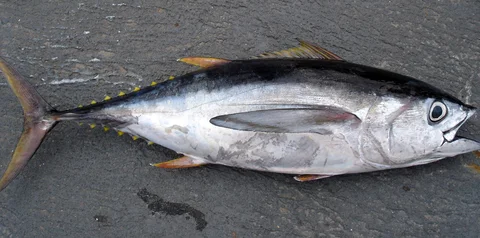 Bigeye TunaBigeye has longer pectoral fins reaching past the second dorsal origin and a larger eye; bluefin pectorals are very short and its body is heavier and rounder
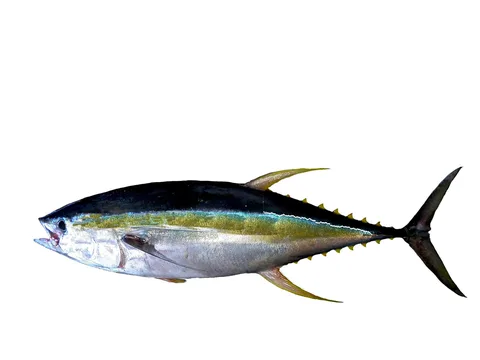 Yellowfin TunaYellowfin is slimmer with long yellow second dorsal and anal fins in large fish; bluefin is far bulkier with short fins and short pectorals
Regulations vary by area and can change in-season — always check the official rules for your area before you fish. Regulations guide →
Plan a trip for Atlantic Bluefin Tuna
Build today's plan