
Saltwater · Summer to fall in the Northeast and Carolina canyons; year-round in Hawaii, often best at night
Bigeye Tuna
Thunnus obesus
A deep-bodied, big-eyed tuna prized for rich sashimi flesh. In Hawaii 'ahi' is shared with yellowfin tuna, so the name alone does not prove the species. At the dock, check pectoral-fin length and body depth to split it from yellowfin. If a fish could be an Atlantic bluefin, remember its rules change yearly — check current regulations and never rely on fixed numbers.
Seasons · Peak
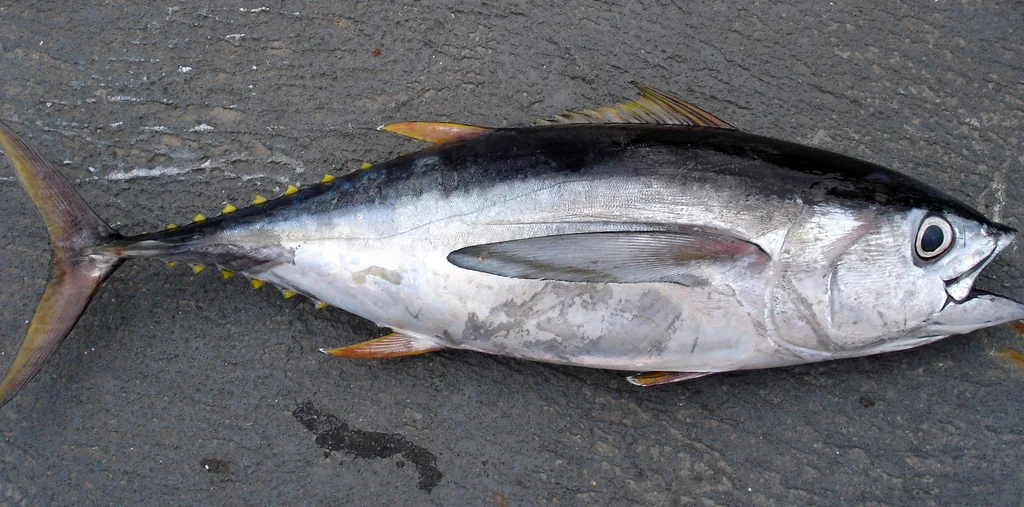
Identifying features
- Stouter, deeper body than yellowfin tuna
- Longer pectoral fins on adults, reaching past the second dorsal fin
- Noticeably large eye for a tuna
- Liver has striations on its surface — an internal check that confirms bigeye
- At the dock, pectoral length and body depth are the practical checks against the slimmer yellowfin
Habits
- Spends the day deep along the thermocline and rises at night to feed
- Feeds on squid, deep-water fish and crustaceans
- Taken at night on chunk slicks in the Northeast canyons in summer and fall
- Aggregates around seamounts and FADs in Hawaii
- A powerful, deep fighter that often sounds under the boat
Distribution
Where to find them
- Hudson to Norfolk Canyons off New Jersey and the Chesapeake
- Canyon edges off Cape Hatteras, North Carolina
- Seamounts and FADs off Hawaii
Where they live
How to catch them
Night chunking in the Northeast canyons Boat
Rig: Chunk butterfish and squid on 60-80 lb fluorocarbon leaders with circle hooks, drifted at different depths in a steady chunk slick over a canyon edge at night
Bait/lure: Butterfish and squid chunks
Key tip: Keep the chunk flow steady and fish one bait deep — bigeyes rise into the slick after dark.
Deep trolling and vertical jigging at seamounts and FADs Boat
Rig: Heavy trolling lures by day around Hawaiian seamounts and FADs, or 200-400 g vertical jigs worked deep at dawn and dusk
Bait/lure: Trolling lures, live bait and metal jigs
Key tip: Mark fish deep on the sounder and drop jigs to that exact depth — bigeyes hold well below surface yellowfin.
Best baits & lures
Baseline setup
- Rod: 50-80 lb class offshore stand-up rod
- Line: 80 lb braid with a 60-80 lb fluorocarbon leader
- Terminal: Circle hooks for chunking, heavy jigs, strong swivels
Recommended gear for this species
Rod · Best value
9' 5-weight fly rod outfit
≈ US$180-260
Covers chironomid lakes and small rivers with one setup.
Flies · Budget
Chironomid assortment (30 patterns)
≈ US$25-40
Chironomids are 60% of a lake rainbow's diet in spring.
Picks come from our rule library — never paid placements. Prices are guides; affiliate links may earn us a commission.
Typical size
Common 40-150 lb (18-68 kg); large fish over 300 lb (136 kg)
On the table
Excellent — rich, fatty sashimi-grade flesh; eat in moderation because large tuna accumulate mercury.
Similar species
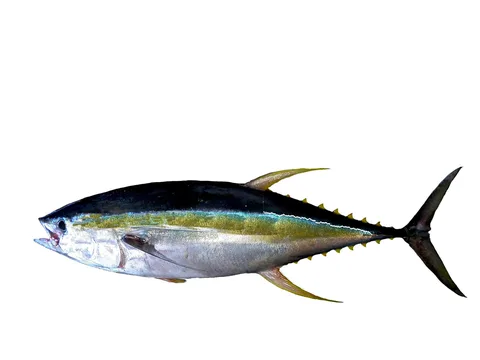 Yellowfin TunaYellowfin is slimmer with shorter pectorals on adults and bright yellow finlets; bigeye is deeper-bodied with longer adult pectorals and a striated liver
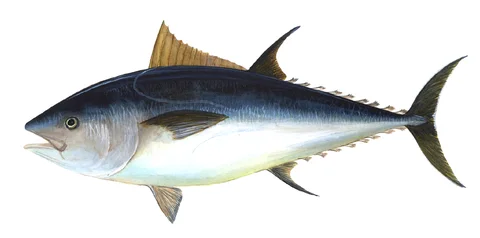 Atlantic Bluefin TunaAtlantic bluefin is far larger and rounder with much shorter pectorals; its rules change yearly, so check current regulations rather than fixed numbers
Regulations vary by area and can change in-season — always check the official rules for your area before you fish. Regulations guide →
Plan a trip for Bigeye Tuna
Build today's plan