
Saltwater · Year-round in the Keys; best fall through spring over reef edges
Cero Mackerel
Scomberomorus regalis
The largest and best-eating of Florida's spotted Atlantic mackerels, and a top light-tackle and fly target in the Keys. It is split from Spanish mackerel by yellow spots plus a dark lateral stripe running the length of the side, and by the pattern of scales on the pectoral-fin base — check both before calling a fish a cero.
Seasons · Peak
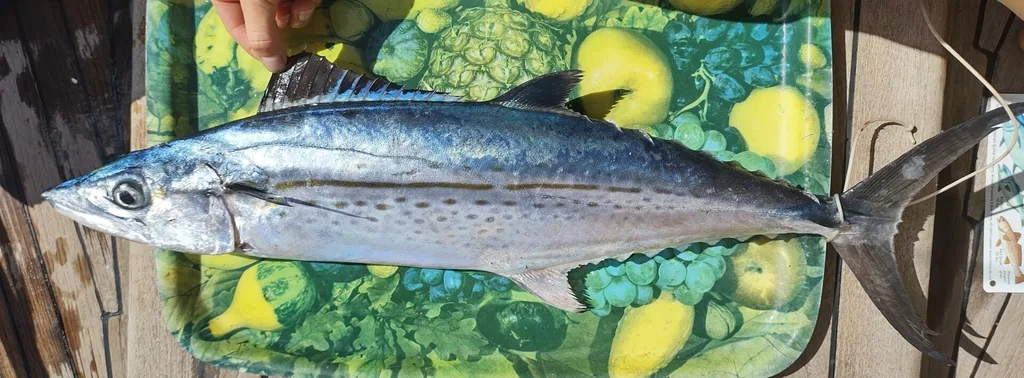
Identifying features
- Yellow-gold spots along the side PLUS a dark bronze lateral stripe running the full length of the body
- Small scales cover the base of the pectoral fin, a different pattern from Spanish mackerel's largely scaleless pectoral base
- Long, low body with a deeply forked tail and a pointed, toothed snout
- Bluish-green back fading to a silvery belly, first dorsal fin pale at the front
- Larger and more elongated than Spanish mackerel, without the king mackerel's steep lateral-line dip
Habits
- Usually solitary or in very small groups, unlike the big schools of Spanish mackerel
- Patrols reef edges and channels hunting shrimp, squid and small baitfish
- Often feeds at the surface at dawn and dusk over shallow reefs
- Strikes lures at speed and makes a fast first run on light tackle
- Stays in clear, warm reef water and rarely mixes far inshore
Distribution
Where to find them
- Reef edges and channels throughout the Florida Keys
- Atlantic reef lines off South Florida
- Clear passes and patch-reef edges in the Keys in fall and winter
Where they live
How to catch them
Trolling spoons, feathers and ballyhoo over reef edges Boat
Rig: Light trolling outfit, small spoon, feather or rigged ballyhoo behind a light leader trolled along reef edges at 4-7 knots
Bait/lure: Spoons, feathers, ballyhoo
Key tip: Use a short trace of light wire — cero are toothy but shy of heavy wire in clear water.
Casting spoons and jigs to surface schools Boat
Rig: Light spinning or fly outfit, small spoon, jig or streamer cast to fish feeding at the surface over shallow reefs
Bait/lure: Spoons, jigs, streamer flies
Key tip: Cast ahead of moving fish and retrieve fast — a slow lure is inspected and refused.
Best baits & lures
Baseline setup
- Rod: Medium-light 7 ft spinning or trolling rod
- Line: 12-20 lb mono or braid
- Terminal: Small spoons and feathers, short light wire trace, 2/0-4/0 hooks
Recommended gear for this species
Rod · Best value
9' 5-weight fly rod outfit
≈ US$180-260
Covers chironomid lakes and small rivers with one setup.
Flies · Budget
Chironomid assortment (30 patterns)
≈ US$25-40
Chironomids are 60% of a lake rainbow's diet in spring.
Picks come from our rule library — never paid placements. Prices are guides; affiliate links may earn us a commission.
Typical size
Common 18-26 in (46-66 cm), 2-5 lb (0.9-2.3 kg); large fish to about 34 in (86 cm) and 10 lb (4.5 kg)
On the table
Excellent — widely rated the best eating of the Atlantic mackerels, with white, mild flesh.
Similar species
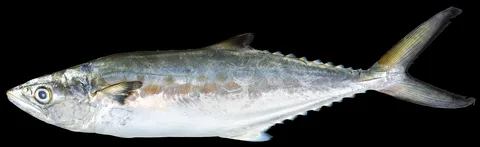 Spanish MackerelSpanish mackerel has yellow spots but NO dark lateral stripe and a largely scaleless pectoral-fin base; cero has spots plus the full-length bronze stripe and scales on the pectoral base
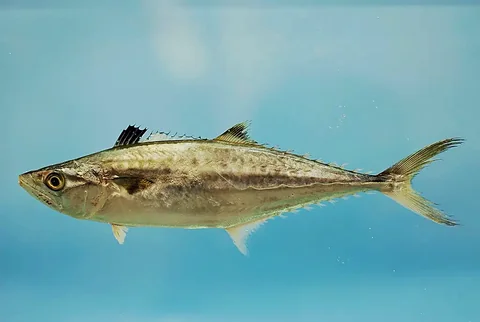 King MackerelKing mackerel has a sharp dip in the lateral line under the second dorsal fin and unspotted adults; cero keeps a straight lateral stripe with spots and no steep dip
Regulations vary by area and can change in-season — always check the official rules for your area before you fish. Regulations guide →
Plan a trip for Cero Mackerel
Build today's plan