
Saltwater · Late spring through autumn; lagoons in summer
Gilthead Bream
Sparus aurata
The Mediterranean's number one seabream, recognised by the gold crown between its eyes — a lagoon and estuary fish as much as an open-coast one, and a shell-crusher. It is expanding into the Channel and now shows up every summer in southern England.
Seasons · Peak
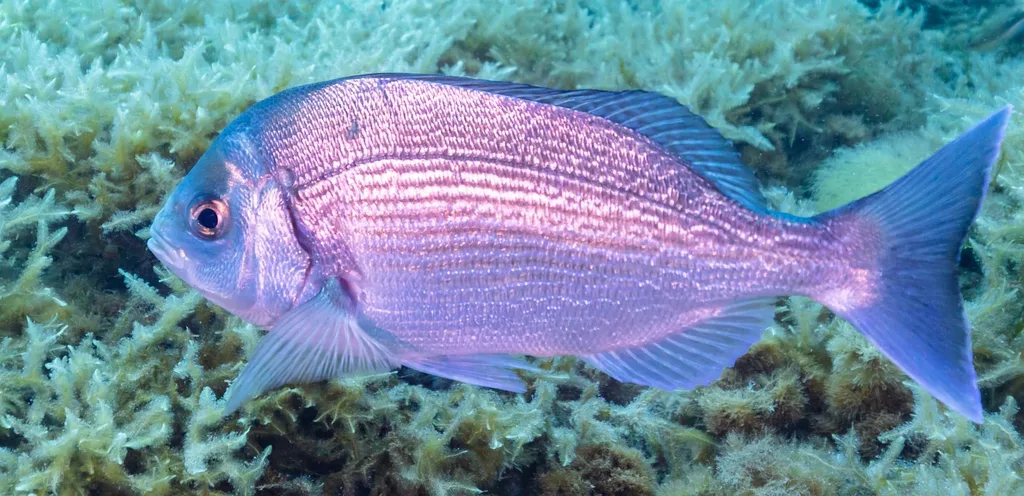
Identifying features
- A curved golden bar between the eyes — the signature 'crown' that gives it the name gilthead
- A black spot at the top of the gill cover, edged with red on large fish
- Deep, silvery body with a faint golden lengthwise band and blue-grey back
- Powerful blunt molars in rows for crushing shellfish, behind small incisors
- Forked tail with slightly bluish fins; juveniles duller with no strong gold bar
Habits
- Born male, with the biggest and oldest fish becoming female — a protandrous life history
- Crushes mussels, oysters and crabs with powerful molar teeth; look for crushed-shell patches
- Juveniles grow up in lagoons and estuaries, adults move to deeper coastal water to spawn in autumn and winter
- Feeds boldly once a shoal settles, but a big fish inspects baits carefully first
- Its range is expanding north — now a regular summer fish in the Channel and southern England estuaries
Distribution
Where to find them
- The lagoons of Languedoc and the Camargue in France
- Ebro Delta and Albufera lagoons in Spain
- North Adriatic harbours and lagoons of Italy
Where they live
How to catch them
Light ledgering in lagoons and estuaries Shore
Rig: Medium spinning rod with a long flowing trace and size 2 hook, light lead fished over sand beside seagrass and rock
Bait/lure: Mussel meat or razor clam
Key tip: Secure mussel meat with bait elastic — giltheads nip mussels at the edge and steal an unsecured bait cleanly.
Anchored boat fishing over sand and mussel beds Boat
Rig: At anchor, a light bottom rig with two flowing traces, size 1-2 hooks, over sand patches and mussel beds
Bait/lure: Crab or prawn
Key tip: Groundbait discreetly with crushed mussel — a gilthead shoal turns bold if the food holds it.
Best baits & lures
Baseline setup
- Rod: 9-11 ft medium spinning rod or 13 ft surf rod for estuaries
- Line: 10-14 lb mono or braid with a long fluorocarbon trace
- Terminal: Long flowing traces, size 2-1/0 strong hooks, light leads
Recommended gear for this species
Rod · Best value
9' 5-weight fly rod outfit
≈ US$180-260
Covers chironomid lakes and small rivers with one setup.
Flies · Budget
Chironomid assortment (30 patterns)
≈ US$25-40
Chironomids are 60% of a lake rainbow's diet in spring.
Picks come from our rule library — never paid placements. Prices are guides; affiliate links may earn us a commission.
Typical size
Common 12-18 in (30-45 cm) and 1.5-4.5 lb (0.7-2 kg); large fish to 28 in (70 cm) and 15 lb (7 kg)+
On the table
Excellent — widely rated the finest eating seabream of Europe; the whole fish grilled is a Mediterranean classic.
Similar species
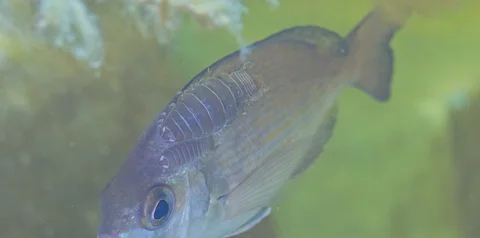 Black BreamBlack bream is a darker, grey Channel and Mediterranean bream with no gold bar or crown at all; the gilthead carries gold between the eyes and a black gill spot
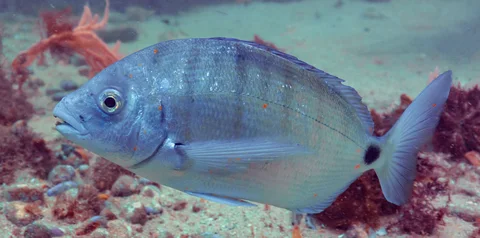 White SeabreamWhite seabream is slimmer and more silvery with a dozen dark vertical bars and a spot at the pectoral-fin base; the gilthead has no bars and wears the gold crown
Regulations vary by area and can change in-season — always check the official rules for your area before you fish. Regulations guide →
Plan a trip for Gilthead Bream
Build today's plan