
Saltwater · Late spring through autumn
White Seabream
Diplodus sargus
The classic Mediterranean rock-fishing bream, silvery and bold around harbours and surf-washed reefs from the French and Italian coasts to Spain. Note on the name: its Spanish name 'sargo' is also used in this guide for a completely different Californian fish (sargo, Anisotremus davidsonii) — the same word, but a different species in a different ocean, so the bare word 'sargo' is deliberately not listed as an alias here. Wary of shadows and noise, it rewards a quiet, lightly weighted bait drifted into white water.
Seasons · Peak
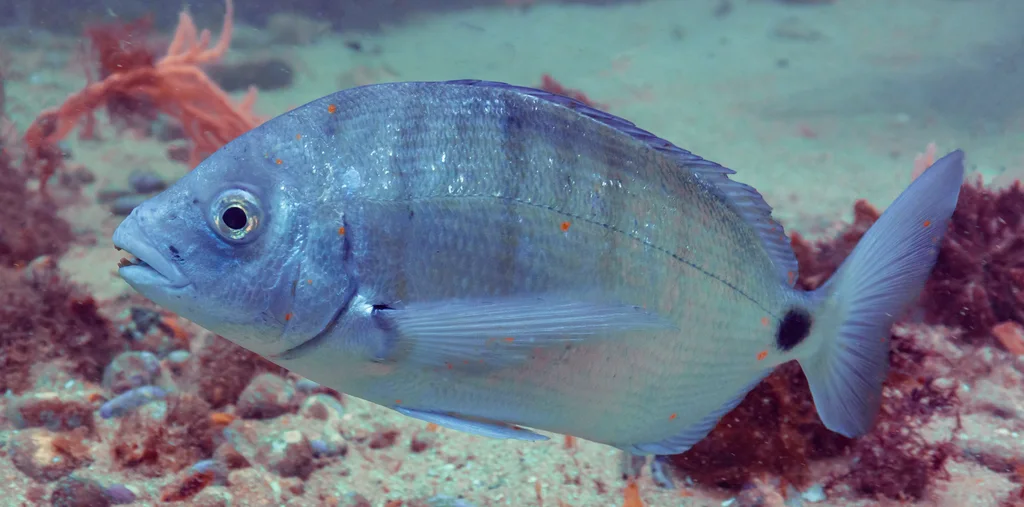
Identifying features
- Deep, compressed silvery-grey body with a dark-edged tail fin
- About five broad dark vertical bars, strongest in young fish and fading in large adults
- Prominent protruding incisor-like front teeth for grazing rock and shell
- Small dark spot sometimes visible at the upper edge of the gill cover
- Single long dorsal fin, spiny in front and soft-rayed behind
Habits
- Holds tight to rock, caves and surf zones, often in small loose groups
- Grazes algae, sea urchins, mussels, barnacles and small crustaceans off the rock
- Feeds most boldly at dawn, dusk and in rough, foamy water
- Very wary — retreats deep into cover at shadows, splashes and vibration
- Spawns in late winter to spring; juveniles shelter in lagoons and harbours
Distribution
Where to find them
- French Mediterranean rocky points and harbour breakwaters
- Italian Adriatic rock groynes and reef edges
- Spanish Mediterranean surf rocks and pier ends
Where they live
How to catch them
Float fishing surf-washed rock Rock fishing
Rig: Sliding-float rig on a long rod, small size 6-8 hook and a light split-shot, bait drifted through the foam at the rock edge
Bait/lure: Prawn pieces, mussel or bread paste
Key tip: Fish the white water right against the rocks and keep low and quiet — this bream spooks at silhouettes.
Light ledgering from harbour walls Shore
Rig: Light running-ledger or paternoster with a 0.5-1 oz weight and size 6 hook, fished close to harbour walls and steps
Bait/lure: Shrimp pieces and mussel flesh
Key tip: Drop the bait tight to the wall where the fish graze, and strike at the slightest dip of the rod tip.
Best baits & lures
Baseline setup
- Rod: 13-16 ft float rod or light 9-10 ft surf rod
- Line: 10-14 lb mono mainline with a 6-8 lb fluorocarbon leader
- Terminal: Small floats, split shot, size 6-8 hooks, light ledger weights
Recommended gear for this species
Rod · Best value
9' 5-weight fly rod outfit
≈ US$180-260
Covers chironomid lakes and small rivers with one setup.
Flies · Budget
Chironomid assortment (30 patterns)
≈ US$25-40
Chironomids are 60% of a lake rainbow's diet in spring.
Picks come from our rule library — never paid placements. Prices are guides; affiliate links may earn us a commission.
Typical size
Common 8-12 in (20-30 cm), about 0.7-1.5 lb (0.3-0.7 kg); large fish to 18 in (45 cm) and over 4 lb (1.9 kg)
On the table
Good — firm white flesh, prized around the Mediterranean grilled whole; watch the fine bones.
Similar species
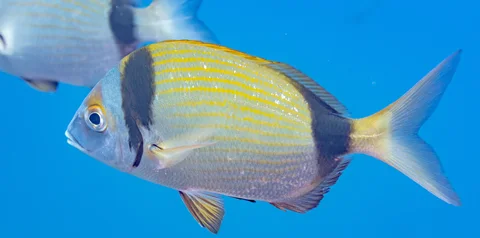 Two-banded SeabreamTwo-banded seabream has exactly two bold black bands — one behind the head and one at the tail base; white seabream has about five fainter grey bars and protruding incisor teeth
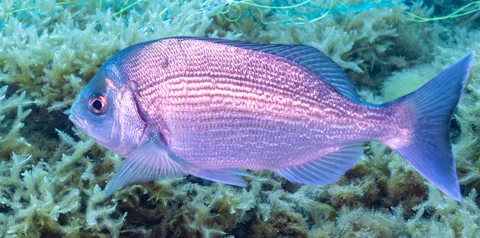 Gilthead BreamGilthead bream has a golden bar between the eyes and a gold cheek patch, with molar teeth for crushing shell; white seabream is plain silver-grey with dark bars and incisors
Regulations vary by area and can change in-season — always check the official rules for your area before you fish. Regulations guide →
Plan a trip for White Seabream
Build today's plan