
Saltwater · Summer and autumn in deep water
Greenland Halibut
Reinhardtius hippoglossoides
The deep, dark flatfish of cold northern water — Norway's blåkveite. Both eyes ride the edge of its dark side, and unusually its blind side is dark too. It lives in the deep basins of the fjords and the Arctic slopes off Canada and Greenland, fished with heavy gear over soft deep bottom.
Seasons · Peak
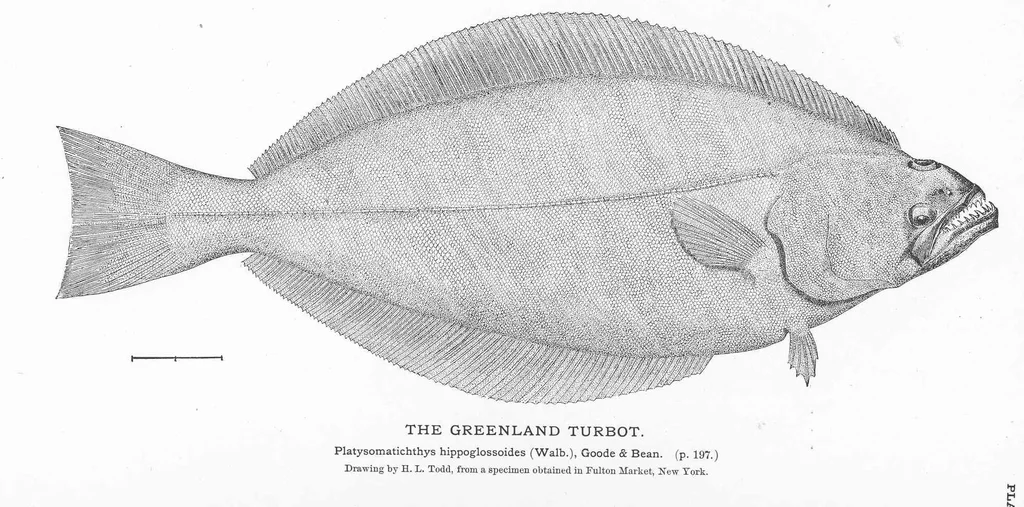
Identifying features
- Elongated flatfish, both eyes on the upper dark side, close to the dorsal edge
- Body dark brown to blackish on the eyed side and dark, not white, on the blind side
- The upper eye sits right on the edge of the head — it can see around both sides
- Straight lateral line running over the pectoral fin, unlike the curved line of Atlantic halibut
- Large mouth with strong teeth; tail slightly concave
Habits
- A deep, cold-water ambush predator lying partly buried on soft bottom
- Feeds on cod, haddock, redfish, squid and shrimp, rising off the bottom to hunt
- Unlike most flatfish it often swims up in the water column after prey
- Spawns in deep water in winter; eggs and larvae drift in deep currents
- Mostly taken in summer and autumn when boats can work the deep fjord basins
Distribution
Where to find them
- Deep basins of northern Norwegian fjords
- Troughs off Troms and Finnmark
- Cold Arctic slopes off Newfoundland
Where they live
How to catch them
Deep baited bottom fishing Boat
Rig: Two-hook paternoster with large circle hooks and a 16-32 oz lead on heavy deep-water gear, lowered to 300-800 m
Bait/lure: Large herring or mackerel strips
Key tip: Sit on the bait — bites begin as a heavy pull; strike with a firm lift, not a snatch.
Baited deep jig over mud basins Boat
Rig: Heavy 14-21 oz jig with a fish strip, lifted and dropped slowly over deep mud basins
Bait/lure: Heavy jig baited with a fish strip
Key tip: Work the jig on the bottom for long spells; Greenland halibut often follow and take on the lift.
Best baits & lures
Baseline setup
- Rod: Heavy 6-7 ft deep-water boat rod
- Line: 50-80 lb braid
- Terminal: Large circle hooks on heavy paternosters, 16-32 oz leads
Recommended gear for this species
Rod · Best value
9' 5-weight fly rod outfit
≈ US$180-260
Covers chironomid lakes and small rivers with one setup.
Flies · Budget
Chironomid assortment (30 patterns)
≈ US$25-40
Chironomids are 60% of a lake rainbow's diet in spring.
Picks come from our rule library — never paid placements. Prices are guides; affiliate links may earn us a commission.
Typical size
Common 24-32 in (60-80 cm), about 7-15 lb (3-7 kg); large fish to 47 in (120 cm) and 100 lb (45 kg)
On the table
Excellent — rich, firm white flesh, the Norwegian blåkveite is a prized food fish.
Similar species
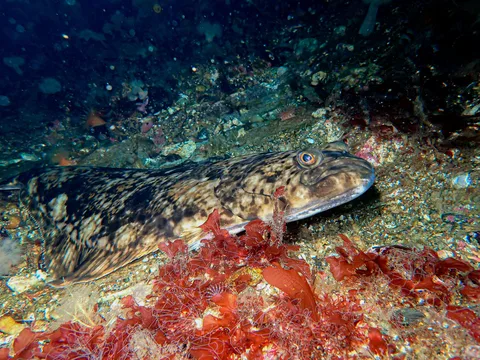 Atlantic HalibutAtlantic halibut is much larger, white on the blind side and has a curved lateral line; Greenland halibut is dark on both sides and more elongated
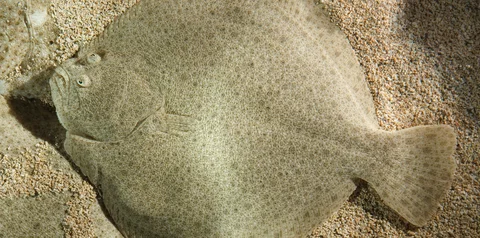 TurbotTurbot is almost round with bony tubercles and both eyes well away from the edge; Greenland halibut is elongated, dark both sides, with the eye on the head edge
Regulations vary by area and can change in-season — always check the official rules for your area before you fish. Regulations guide →
Plan a trip for Greenland Halibut
Build today's plan