
Saltwater · Late spring and summer
Turbot
Scophthalmus maximus
The king of flatfish — a broad, left-eyed ambush predator whose eyed side carries bony tubercles instead of scales. It eats fish, not worms, and lives over sand and gravel banks off Europe's coasts. Steinbutt in German.
Seasons · Peak
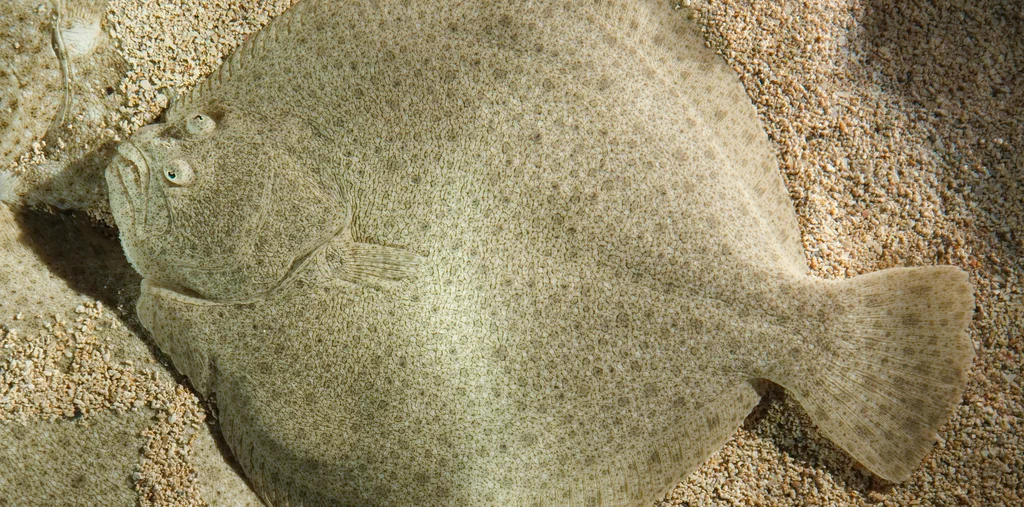
Identifying features
- Left-eyed flatfish: both eyes on the left side of the head
- Eyed side covered in scattered bony tubercles instead of true scales — rough to the touch
- Broad, diamond-shaped body, much thicker and meatier than other flatfish
- Large mouth with a protruding lower jaw, built for eating fish
- Eyed side brown-grey and mottled to match gravel; blind side white
Habits
- An ambush predator of fish — sandeels, sprats and small flatfish, not a worm feeder
- Lies camouflaged on gravel, lunging at passing baitfish
- Most active in daylight over banks on a steady drift
- Spawns in late spring and summer on gravel in deeper water
- Large adults patrol bank edges and wreck fringes alone
Distribution
Where to find them
- Channel and North Sea sandbanks off France, Britain and the Netherlands
- Western Baltic slopes and deep channels off Germany and Denmark
- Norwegian fjord mouths and bank edges with sandeels
Where they live
How to catch them
Drifting fish baits over banks Boat
Rig: Medium-heavy boat rod with a long flowing trace, a sandeel or mackerel strip drifted slowly over sand and gravel banks
Bait/lure: Sandeel, mackerel strips
Key tip: Drift with the tide over the bank edges and keep the bait tight to the bottom — turbot lunge up from below.
Anchored fishing on wreck and reef edges Boat
Rig: Anchored boat with a fish-bait rig fished over the lee edge of wrecks and reefs where baitfish gather
Bait/lure: Small live fish, fish strips
Key tip: Give a bite time — turbot often hold the bait before taking it fully.
Best baits & lures
Baseline setup
- Rod: Medium-heavy boat rod (12-20 lb class)
- Line: 30-40 lb braid with a strong flowing trace
- Terminal: Long flowing traces, 2/0-4/0 hooks, watch leads
Recommended gear for this species
Rod · Best value
9' 5-weight fly rod outfit
≈ US$180-260
Covers chironomid lakes and small rivers with one setup.
Flies · Budget
Chironomid assortment (30 patterns)
≈ US$25-40
Chironomids are 60% of a lake rainbow's diet in spring.
Picks come from our rule library — never paid placements. Prices are guides; affiliate links may earn us a commission.
Typical size
Common 16-24 in (40-60 cm), about 3-10 lb (1.4-4.5 kg); large fish to 39 in (100 cm) and 55 lb (25 kg)
On the table
Excellent — firm, meaty white flakes; widely called the king of flatfish and a premium table fish.
Similar species
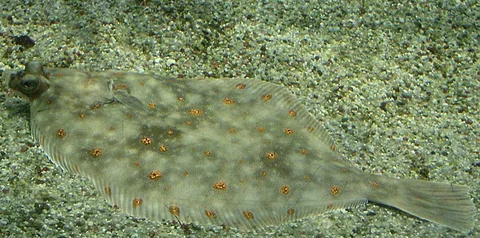 PlaicePlaice is right-eyed, smooth and orange-spotted and feeds on worms and shellfish; turbot is left-eyed, tuberculate and a fish-eating ambush predator
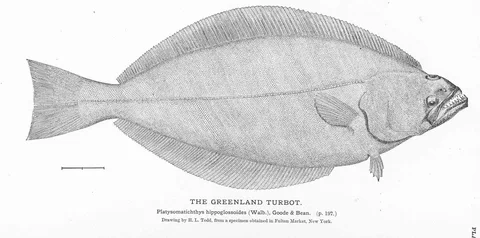 Greenland HalibutGreenland halibut is a giant deep-water flatfish of the Arctic and deep North Atlantic with a long body; turbot is a broad, diamond-shaped fish of temperate European coastal banks
Regulations vary by area and can change in-season — always check the official rules for your area before you fish. Regulations guide →
Plan a trip for Turbot
Build today's plan