
Saltwater · Year-round on deep reefs; most often taken in cooler months on deep structure in Florida and the Gulf
Lesser Amberjack
Seriola fasciata
The smallest amberjack, a deep-reef Seriola of 55 m and deeper that is easily confused with its banded juveniles and bigger cousins. It feeds on fish and squid near the bottom and is a specialist deep-jigging and bait catch.
Seasons · Peak
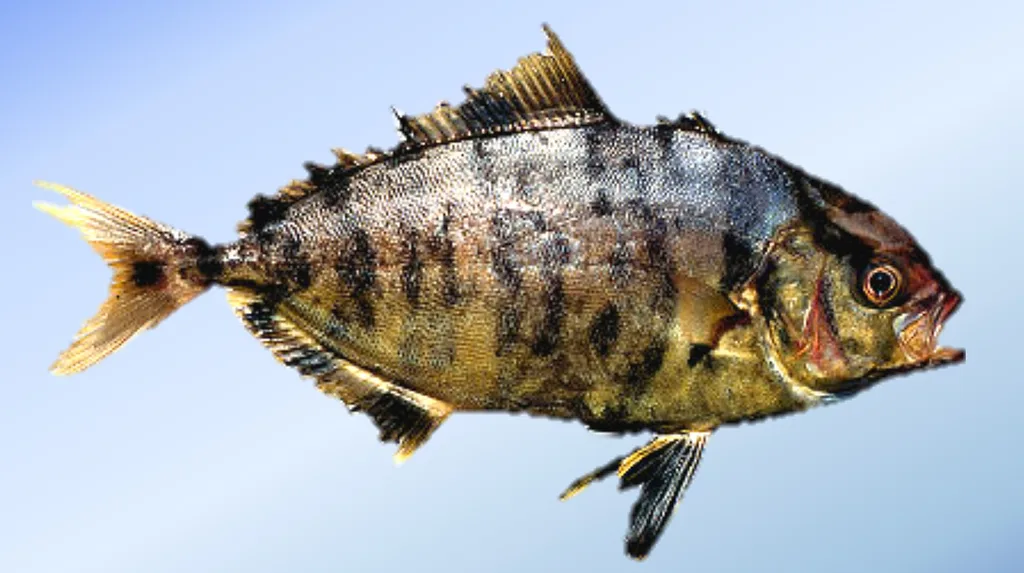
Identifying features
- Olive-green to brownish back with silver flanks and a dark stripe from behind the eye to the first dorsal fin
- Proportionately larger eye and deeper body than the greater amberjack
- Anal-fin base about two-thirds the length of the second dorsal-fin base — a key separator from greater amberjack
- Juveniles carry split or wavy dark transverse bars
- Much smaller adult size — maximum under 70 cm, unlike the metre-plus greater amberjack
Habits
- Benthopelagic adults hold on or near the bottom at 55-130 m, recorded to 348 m
- Feeds on smaller fish and cephalopods, including squid
- Larger juveniles are pelagic or benthic over the shelf; small juveniles occur offshore in open water
- Eggs are pelagic; adults are structure-oriented and rarely inshore
Distribution
Where to find them
- Deep reef ledges and wrecks in 55-130 m
- Shelf-edge drop-offs off Florida's Atlantic coast and in the Gulf
- Deep live-bottom areas fished with sonar marks just off the bottom
Where they live
How to catch them
Deep vertical jigging Boat
Rig: Jigging rod, 30-50 lb braid, 60-80 g metal jig on a fluorocarbon leader
Bait/lure: Metal vertical jig
Key tip: Mark fish tight to deep ledges at 55-130 m, drop to just off the bottom and work short, sharp lifts; lesser amberjacks rarely rise far.
Deep bait fishing on wrecks Boat
Rig: Conventional outfit, bottom rig with cut bait or squid on a circle hook
Bait/lure: Cut bait, squid or small live baitfish
Key tip: Anchor or drift precisely over deep wreck edges and keep baits within a metre of the bottom, where adults feed.
Best baits & lures
Baseline setup
- Rod: Medium-heavy jigging / conventional rod
- Line: 30-50 lb braid
- Terminal: 60-80 g jigs, 50 lb fluorocarbon leader, circle hooks
Recommended gear for this species
Rod · Best value
9' medium-heavy surf spinning rod
≈ US$110-170
Casts plugs and bait past the breakers and handles stripers, drum and bluefish in the wash.
Reel · Best value
5000 size sealed spinning reel
≈ US$120-180
Salt spray and dunkings kill cheap reels — a sealed body and 30 lb braid capacity are the surf standard.
Terminal · Budget
Topwater plugs, soft-plastic jigs and fish-finder rigs
≈ US$25-40
Plugs for blitzes, jigs for the trough, bait on a fish-finder rig when they won't chase — the inshore trio.
Picks are never paid placements. Prices are guides; price links are coming soon and none is an affiliate link yet.
Typical size
Common about 50 cm; maximum 67.5 cm fork length and 4.6 kg
On the table
Good eating like other amberjacks; FishBase notes reports of ciguatera poisoning, so follow local reef-fish guidance.
Similar species
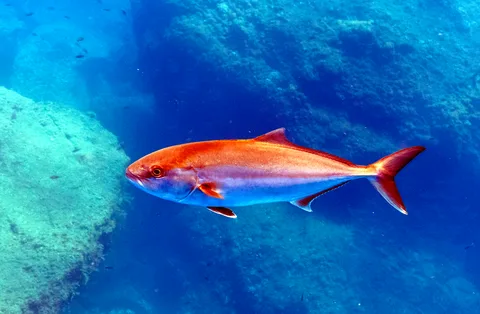 Greater AmberjackGreater amberjack grows past 1 m and 40 kg with a smaller relative eye size and a longer anal-fin base; lesser stays under 68 cm and 4.6 kg
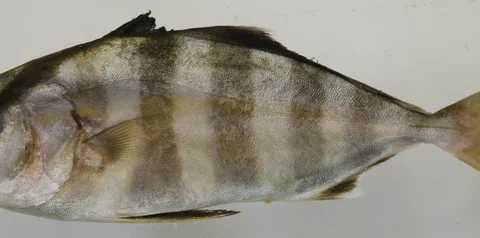 Banded RudderfishBanded rudderfish juveniles and adults keep bold dark bars and a blunt, steep head and associate with floating objects and jellyfish; lesser amberjack adults lose the bars except the eye stripe
Regulations vary by area and can change in-season — always check the official rules for your area before you fish. Regulations guide →
Plan a trip for Lesser Amberjack
Build today's plan⚠ Heads-up: Lesser Amberjack doesn't occur around Vancouver, BC (or is very rare there), so it's not a sensible local target. Your plan stays in Vancouver, BC and is built around the fish that actually live there.