
Saltwater · Summer best; June to September in the surf, spring and fall at bay mouths
Northern Kingfish
Menticirrhus saxatilis
A surf-zone croaker of the mid-Atlantic, most common from New Jersey through Chesapeake Bay. It has no swim bladder, so unlike other croakers it cannot croak. It is one of three US kingfish — this page covers the northern species, separate from the southern kingfish and gulf kingfish found farther south.
Seasons · Peak
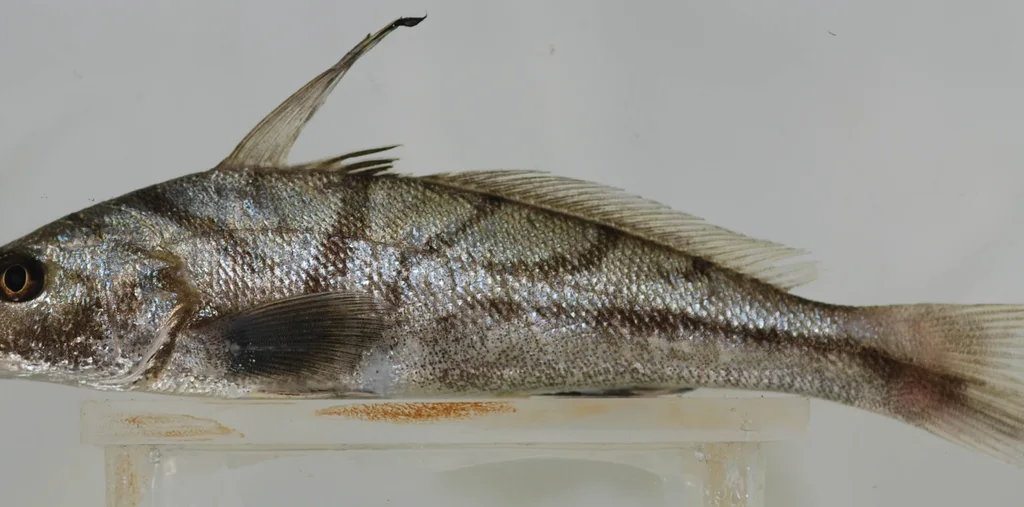
Identifying features
- Single short barbel on the chin — kingfish trademark
- No swim bladder, so it never croaks when handled
- Dusky bars on a grey-brown back, fading with age
- Deeply forked tail with an elongated upper lobe pattern in juveniles
- Soft dorsal fin long and low; blunt head with a slightly underslung mouth
Habits
- Feeds in small groups in the wash right behind breaking waves
- Eats sand fleas (mole crabs), shrimp, small crabs and worms
- Moves into surf and bays in summer, offshore in winter
- Cannot croak — silent when caught, unlike Atlantic croaker
- Bites best on calm surf days with gentle onshore movement
Distribution
Where to find them
- New Jersey surf beaches and piers in summer
- Chesapeake Bay mouth beaches and jetties
- Carolina outer-banks troughs behind the first breaker line
Where they live
How to catch them
Surf fishing behind the breakers Shore
Rig: Light surf rod, two-hook bottom rig with size 4-6 hooks and a pyramid sinker, cast just behind the breakers into the trough
Bait/lure: Bloodworms, shrimp or sand fleas
Key tip: Fish close — most kingfish feed within 30 ft (9 m) of the beach in the wash.
Pier and jetty bottom rigs Shore
Rig: Medium-light rod, high-low rig over sand beside piers and jetties, small hooks kept near the bottom
Bait/lure: Mole crabs or squid strips
Key tip: Let the rig sit in the sand trough and recast often — schools move along the beach.
Best baits & lures
Baseline setup
- Rod: Light 7-9 ft surf rod or medium-light pier rod
- Line: 10-15 lb mono or braid
- Terminal: Two-hook bottom rigs, size 4-6 hooks, 2-3 oz pyramid sinkers
Recommended gear for this species
Rod · Best value
9' 5-weight fly rod outfit
≈ US$180-260
Covers chironomid lakes and small rivers with one setup.
Flies · Budget
Chironomid assortment (30 patterns)
≈ US$25-40
Chironomids are 60% of a lake rainbow's diet in spring.
Picks come from our rule library — never paid placements. Prices are guides; affiliate links may earn us a commission.
Typical size
Common 10-14 in (25-36 cm), about 0.5-1.5 lb (0.2-0.7 kg); large fish to 18 in (46 cm)
On the table
Good — sweet, white, flaky flesh; a prized surf panfish, best fresh.
Similar species
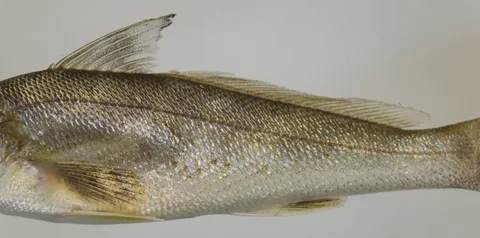 Southern KingfishSouthern kingfish has a dark blotch at the pectoral-fin base and a more southerly range; northern kingfish shows dusky body bars and no pectoral blotch
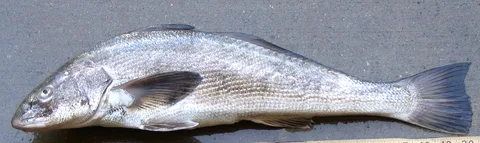 California CorbinaCalifornia corbina is a Pacific fish with a single chin barbel too, but a slimmer body and no dusky bars; ranges do not overlap
Regulations vary by area and can change in-season — always check the official rules for your area before you fish. Regulations guide →
Plan a trip for Northern Kingfish
Build today's plan