
Saltwater · Rules change yearly — check before fishing; summer-autumn off northern Honshu/Hokkaido (Tsugaru Strait famous); juveniles summer off California
Pacific Bluefin Tuna
Thunnus orientalis
Rules first: Pacific bluefin in Japan is under strict national quota management; fish under 30 kg may not be kept, and recreational rules change by year and prefecture — check the current Fisheries Agency and local rules before fishing. This page is about identification and rules, not a how-to-catch guide. The Pacific bluefin is the largest tuna in Japanese waters, migrating across the whole Pacific, with juveniles reaching California. Any encounter must start from the current quota and size rules.
Seasons · Peak
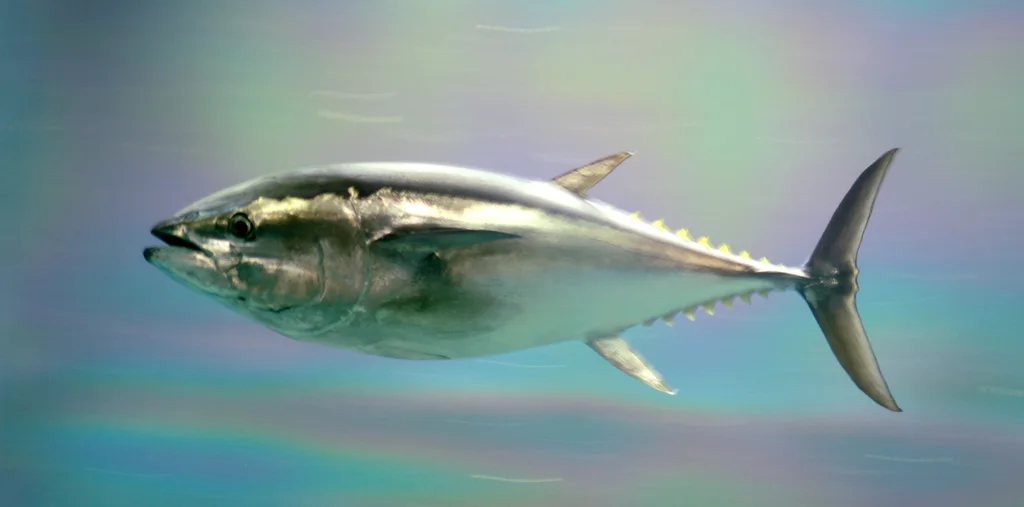
Identifying features
- Very large, robust tuna with a dark blue back and silvery belly
- Short pectoral fins compared with albacore
- Stout body, highest near the front, with a strong keel on the tail base
- Small dark spots or a silvery band on the lower belly in some fish
- Rules check comes first: fish under 30 kg may not be kept in Japan
Habits
- Migrates across the Pacific between Japan and the California coast
- Feeds on sardines, anchovies, squid and mackerel in surface schools
- Spawns in waters around Japan, including the Sea of Japan and Nansei area in general terms
- Juveniles travel east across the Pacific and return as they grow
- Strict national quota management applies in Japan — rules change yearly
Distribution
Where to find them
- Tsugaru Strait off Oma, Aomori
- Off eastern Hokkaido in summer-autumn
- Sea of Japan grounds off northern Honshu
Where they live
How to catch them
Trolling where rules allow Boat
Rig: Offshore trolling with lures from a boat in legal seasons and areas only, after checking the current quota and prefecture rules
Bait/lure: Trolling lures
Key tip: Check rules before fishing — if keeping is not allowed, do not target the fish.
Casting into feeding schools where rules allow Boat
Rig: Casting stickbaits or jigs into surface feeding schools from a boat, only where and when the current rules allow it
Bait/lure: Stickbaits and metal jigs
Key tip: Rules first on every trip: quota, minimum 30 kg to keep, and yearly changes decide whether fishing may happen at all.
Best baits & lures
Baseline setup
- Rod: Heavy offshore boat rod
- Line: Heavy braid with a strong leader, matched to legal offshore tackle
- Terminal: Trolling lures, stickbaits and heavy jigs — used only where current rules allow
Recommended gear for this species
Rod · Premium
6'6" heavy trolling / stand-up rod
≈ US$200-320
Built to fight tuna, mahi and marlin from a harness — short, powerful, with heavy-duty guides.
Reel · Premium
Lever-drag trolling reel, 50 lb class
≈ US$260-400
A preset lever drag and 600+ yards of line are what separate landing a bluefin from watching it spool you.
Terminal · Best value
Trolling lures, rigged baits and deep jigs
≈ US$40-70
Skirted lures and cedar plugs on the troll, vertical jigs when the school sounds — the offshore spread basics.
Picks are never paid placements. Prices are guides; price links are coming soon and none is an affiliate link yet.
Typical size
Common fish encountered are juveniles and school fish well under 220 lb (100 kg); large adults to about 10 ft (3 m) and 990 lb (450 kg) — fish under 30 kg may not be kept in Japan
On the table
Only fish that may legally be kept under the current quota and size rules should ever be taken; otherwise release or do not target. Legally kept bluefin is highly prized, professionally handled only.
Similar species
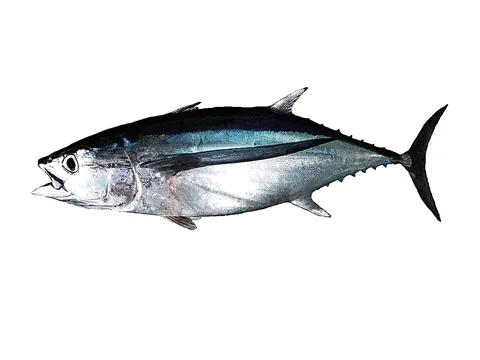 Albacore TunaAlbacore has very long wing-like pectoral fins reaching well back; Pacific bluefin has short pectoral fins and a much stouter, larger body
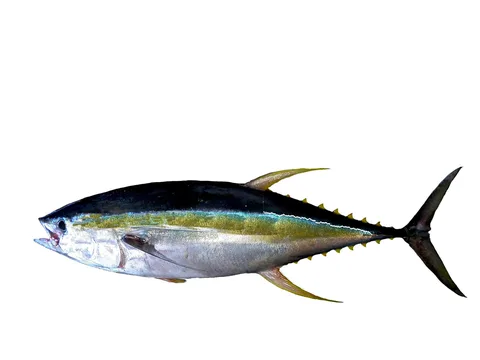 Yellowfin TunaYellowfin has longer yellow-edged anal and second dorsal fins and a slimmer body; Pacific bluefin is stouter, darker blue and short-finned
Regulations vary by area and can change in-season — always check the official rules for your area before you fish. Regulations guide →
Plan a trip for Pacific Bluefin Tuna
Build today's plan⚠ Heads-up: Pacific Bluefin Tuna doesn't occur around Vancouver, BC (or is very rare there), so it's not a sensible local target. Your plan stays in Vancouver, BC and is built around the fish that actually live there.