
Freshwater · Warm months best; May to September, spawning in late spring in flooded shallows
Spotted Gar
Lepisosteus oculatus
A heavily armoured, spot-covered ambush predator of southern backwaters, taken on rope flies and live minnows in the United States. Canada population panel: the same species in Ontario (Lake Erie and Rondeau Bay waters) is listed Threatened and protected under Canada's Species at Risk Act — fully protected there, with no season.
Seasons · Peak
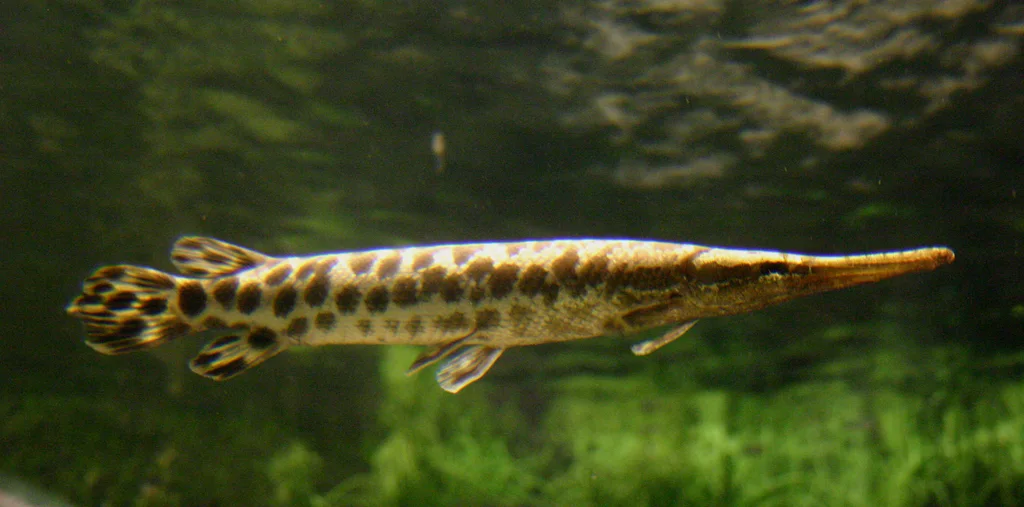
Identifying features
- Dark spots over the whole body, including the top of the head and snout
- Short, broad snout — much shorter than the longnose gar's needle jaws
- Hard, diamond-shaped ganoid scales forming heavy armour
- Long cylindrical body with the dorsal and anal fins set far back near the tail
- The spotted pattern continues onto the fins
Habits
- Lies motionless among weeds and ambushes fish and crustaceans
- Can breathe air and survives warm, low-oxygen backwaters
- Spawns in late spring over flooded vegetation; the eggs are toxic
- Most active at dusk and at night, cruising the shallows
- Slow-growing and long-lived; often released by the anglers who target it
Distribution
Where to find them
- Oxbows and bayous in deep-south and Louisiana Gulf waters
- Sloughs and backwaters in Iowa-Missouri river country
- Vegetated lake edges in Texas and Tennessee-Kentucky in warm months
Where they live
How to catch them
Rope flies for cruising gar Lake
Rig: Long fly or spinning rod with a hookless frayed-nylon rope fly cast ahead of cruising fish in sloughs and backwaters
Bait/lure: Frayed nylon rope fly (no hook)
Key tip: Let the fish strike and work its jaws so the nylon tangles in its teeth — lift steadily, with no hard hookset.
Live minnows under a float Lake
Rig: Medium rod, float and small hook with a live minnow, fished in oxbows and bayous
Bait/lure: Live minnows
Key tip: Let the gar run and hold the bait in its jaws for a while before a gentle set.
Best baits & lures
Baseline setup
- Rod: Medium 7 ft spinning or fly rod
- Line: 12-20 lb braid or mono with a strong leader
- Terminal: Rope flies, small strong hooks, floats
Recommended gear for this species
Rod · Best value
9' 5-weight fly rod outfit
≈ US$180-260
Covers chironomid lakes and small rivers with one setup.
Flies · Budget
Chironomid assortment (30 patterns)
≈ US$25-40
Chironomids are 60% of a lake rainbow's diet in spring.
Picks come from our rule library — never paid placements. Prices are guides; affiliate links may earn us a commission.
Typical size
Common 18-24 in, 1-3 lb (0.5-1.4 kg); large fish to about 36 in and 9 lb (4 kg)
On the table
Flesh is firm and edible where legal, but the eggs are toxic — never eat the roe; many anglers release gars.
Similar species
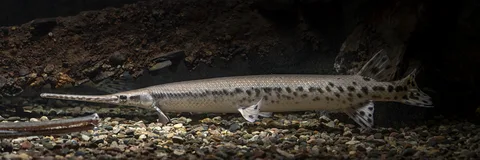 Longnose GarLongnose gar has a very long, needle-thin snout and spots mostly on the rear body; spotted gar has a short broad snout and spots over the whole body including the head
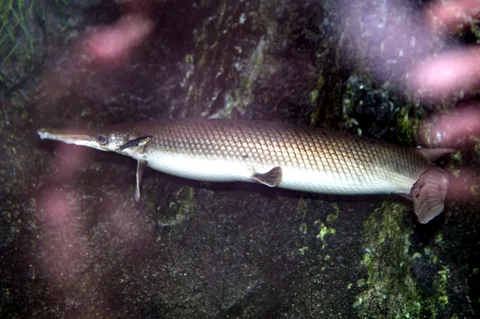 Alligator GarAlligator gar is far larger with a broad alligator-like snout and two rows of large upper teeth; spotted gar is smaller, slimmer and heavily spotted
Regulations vary by area and can change in-season — always check the official rules for your area before you fish. Regulations guide →
Plan a trip for Spotted Gar
Build today's plan