
Freshwater · Spring spawning runs best; April to June, plus autumn schooling and winter ice fishing in the north
Yellow Bass
Morone mississippiensis
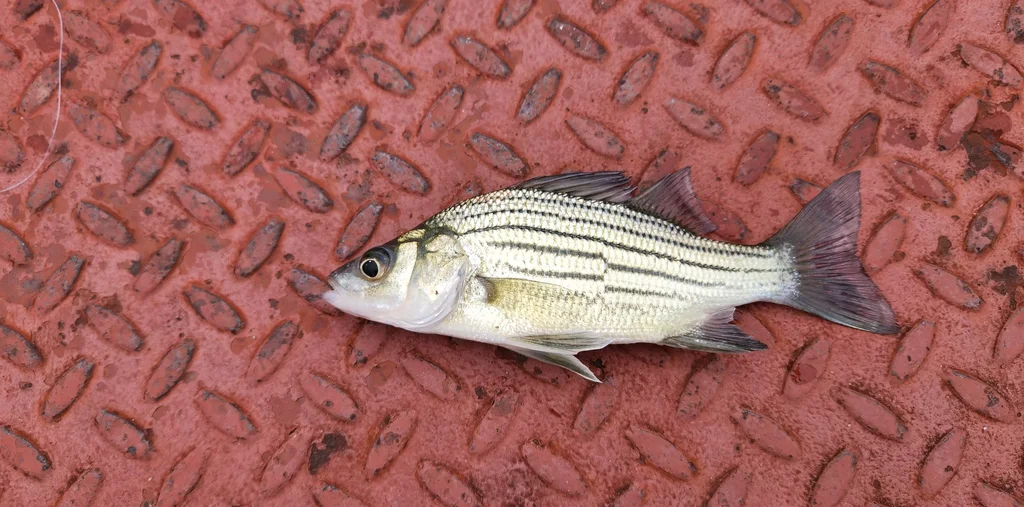
A small, schooling panfish of the Mississippi basin with yellow-gold flanks and dark stripes that are broken and offset above the anal fin — that break is the key split from white bass. It travels in large schools, bites small jigs and minnows freely, and is a lively target in rivers, reservoirs and northern ice fishing.
Seasons · Peak
Identifying features
- Yellow-gold flanks, deeper and more golden than white bass
- Dark lengthwise stripes are broken and offset above the anal fin
- Stripes are continuous on the front half, then step out of line toward the tail
- Deep, compressed body with a small mouth and joined dorsal fins
- Usually under a foot long, with a brassy sheen in spawning season
Habits
- Travels in large open-water schools that roam rivers and reservoirs
- Feeds on small shad, minnows, insects and crustaceans
- Runs up creeks and river channels to spawn in spring
- Feeds most actively at dawn, dusk and on overcast days
- Stays active under the ice in northern lakes in winter
Distribution
Where to find them
- Spring creek mouths and river channels in Iowa and Missouri
- Mississippi River backwaters and wing-dam edges
- Northern Wisconsin lake basins through the ice in winter
Where they live
How to catch them
School fishing with jigs and minnows River
Rig: Light spinning rod, 1/16-1/8 oz jig or small spoon, or a minnow under a float, worked around located schools in rivers and reservoirs
Bait/lure: Small jigs, spoons and live minnows
Key tip: Find the school with sonar or birds, stay above it and keep baits small — once one bites, the whole school often fires.
Ice fishing with jigging spoons Lake
Rig: Short ice rod, small jigging spoon or jig tipped with a wax worm, jigged just off bottom in northern lakes
Bait/lure: Small jigging spoons, wax worms
Key tip: Work basins of 15-30 ft (5-9 m), lift-drop slowly and watch for light bites on the fall.
Best baits & lures
Baseline setup
- Rod: Light 6 ft (1.8 m) spinning rod
- Line: 6 lb (2.7 kg) mono
- Terminal: 1/16-1/8 oz jigs, small spoons, size 6 hooks
Recommended gear for this species
Rod · Best value
7'3" medium-heavy casting rod
≈ US$100-150
One rod for jigs, Texas rigs and frogs — the bass workhorse.
Reel · Budget
7.1:1 baitcasting reel
≈ US$80-120
Fast retrieve for pitching and quickly taking up slack on hooksets.
Line · Budget
15 lb fluorocarbon (200 yd)
≈ US$18-25
Invisible in clear water, sensitive on rock, abrasion resistant.
Picks come from our rule library — never paid placements. Prices are guides; affiliate links may earn us a commission.
Typical size
Common 8-11 in (20-28 cm); large fish to about 14 in (36 cm)
On the table
Good — firm white flakes like white bass, but small, so several fish make a meal.
Similar species
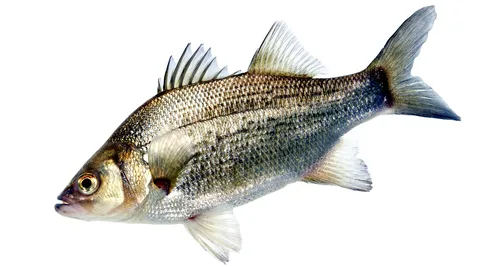
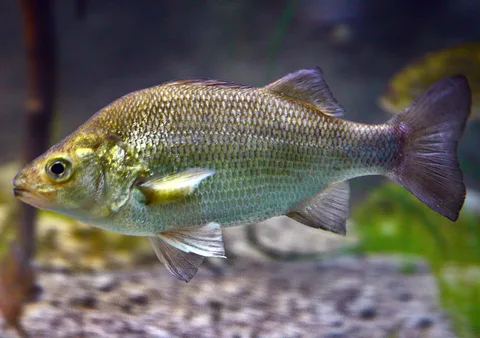
Regulations vary by area and can change in-season — always check the official rules for your area before you fish. Regulations guide →
Plan a trip for Yellow Bass
Build today's plan